
Staff Correspondent

The establishment of the Bangladesh-China Friendship General Hospital in Nilphamari, a northern border district, was approved on Sunday, with the aim of offering advanced medical services to people of Bangladesh’s northern region and neighbouring countries.
A meeting of the executive committee of the National Economic Council presided over by interim government chief adviser Professor Muhammad Yunus at the Planning Commission in the capital Dhaka approved the much-talked-about project at an estimated cost of Tk 2,293 crore, most of which will come as Chinese grant.
Once completed in 2028, the 1,000-bed 10-storied hospital in Nilphamari will offer treatment to complicated and chronic diseases related to cardiology, nephrology, oncology, neurology and maternal-neonatal care to the northern region people.
‘It will also offer healthcare facility to patients from neighbouring countries,’ said planning adviser Wahiduddin Mahmud.
The joint-venture project was initiated by the Awami League government, which was ousted on August 5, 2024, in the wake of a mass uprising, laying its foundation stone in 2023 in Panchagarh, a neighbouring district of Nilphamari.
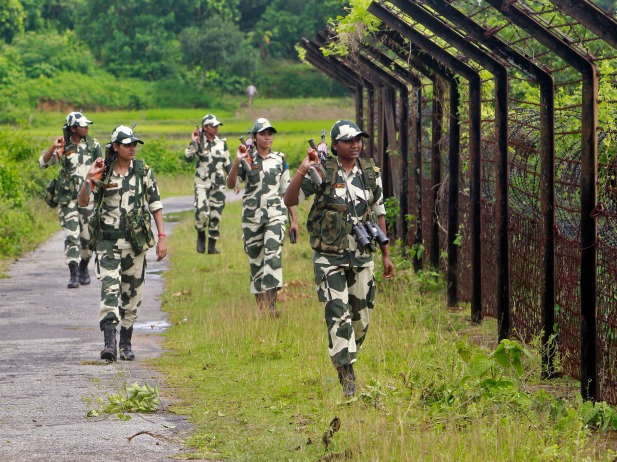
Both Nilphamari and Panchagarh bordering Cooch Behar of India in the north are about 100 kilometres from India’s Siliguri Corridor, a 20–22km-wide corridor linking mainland India with its north-eastern states, separating Bangladesh from Nepal and Bhutan, two Himalayan countries.
The selection of Nilphamari for establishing of the hospital has been decided by the interim government, said Wahiduddin.
China, which will give Tk 2,220 crore in grant for the project, had no site selection preferences, said the planning adviser.
The government of Bangladesh will provide Tk 72.9 crore for the implementation of the project.
National Institute of Preventive and Social Medicine’s former microbiology professor, Benazir Ahmed, said that attracting patients from neighbouring countries depended mainly how effective the healthcare facility was, not the establishment of hospitals.
China will provide fund while the hospital will be operated by Bangladeshi physicians, he said, adding that the project was like many other Chinese projects in Bangladesh to enhance the bilateral relationship.
The project is expected to open up the Belt and Road Healthcare Centre, a global Chinese initiative to connect patients with its advanced healthcare system, while promoting Chinese medical technology.
China has also shown keen interest to establish a 500 to 700-bed general hospital at South Karnaphuli in Chattogram, and a 100-bed rehabilitation centre for patients with various disabilities at Dhamrai in Dhaka.
Besides, China is encouraging Bangladeshis to avail healthcare facility at designated four hospitals in Kunming under its Yunnan province after India has restricted visas for Bangladeshis following the fall of the authoritarian regime of Sheikh Hasina.
Since August 2024, India has handed out fewer than 1,000 medical visas each working day, down from a figure of 5,000 to 7,000 before.
It has been reported that India has fortified the Siliguri Corridor with Rafale fighter jets and Russian-made S-400 air defence system to secure the strategically corridor, also known as ‘chicken neck’.
As China is negotiating with Bangladesh to take part in flood and water management of the cross-boundary river, Teesta, in the country’s northern region, India has been wary of the Chinese presence near the ‘chicken neck’.
About Tk 802 crore, nearly 35 per cent of the total project cost, has been proposed to be spent for the construction of the hospital over one lakh square metres of land.
Electrification and equipment will comprise the remaining cost of the project.