Bangladesh’s economic recovery remains fragile after the new government’s first six months in office, with a mixed performance marked by easing inflation but persistent weaknesses in revenue mobilisation, investment, industrial output and the financial sector, according to the Centre for Policy Dialogue (CPD).
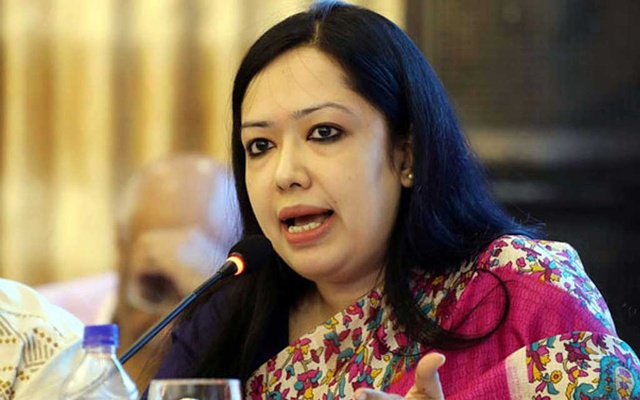
Presenting an assessment of the government’s first 180 days at a media dialogue in Dhaka on Monday, CPD Distinguished Fellow Dr Debapriya Bhattacharya said the overall picture was mixed, with negative trends predominating and many of the weaknesses being structural in nature.
The assessment, based on 362 observations across nine areas, found some positive government actions in governance, public finance, industry and trade, banking, energy, agriculture, education, health and social protection. However, the CPD stressed that only concrete actions were considered, excluding announcements and pledges that had not translated into action.
Inflation eases, but growth remains weak
Headline inflation declined to 8.3 per cent in July from 9.1 per cent in February, while food inflation fell to 7.2 per cent from 9.3 per cent. The wage rate index also improved marginally to 8.2 per cent from 8.1 per cent, although real wage growth remained negative.
However, the recovery in output and investment has remained elusive. Industrial production growth fell to zero from 3.4 per cent, while manufacturing growth also dropped to zero from 3.5 per cent. Net foreign direct investment declined to $594 million from $662 million, and private-sector credit growth slowed to 4.5 per cent from 6 per cent.
The CPD noted that GDP growth had already been slowing before the government took office in late February. Quarterly growth fell from 4.96 per cent in Q1 FY26 to 3.03 per cent in Q2 and 2.22 per cent in Q3 FY26. The third quarter, partly under the new government, recorded the weakest quarterly growth of FY26 and less than half the growth recorded in the same quarter a year earlier.
Revenue remains a major weakness
The assessment highlighted revenue mobilisation as one of the government’s biggest challenges. NBR revenue growth fell from 12.4 per cent during July-February FY26 to 11.1 per cent during March-May, while total tax growth plunged from 12.3 per cent to 4.9 per cent.
The CPD warned that meeting the FY27 revenue target of Tk 6.95 trillion (Tk 6.95 lakh crore) would require revenue growth of around 42 per cent. It estimated a possible revenue shortfall of Tk 1.30-1.40 trillion (Tk 1.30-1.40 lakh crore), equivalent to about 19-20 per cent of the annual target.
The report said the government should prepare for such a shortfall rather than rely on unrealistic revenue assumptions. It warned that, under existing practices, adjustment would likely fall heavily on the Annual Development Programme, potentially affecting development spending.
External sector under pressure
Exports improved, moving from a 3.2 per cent contraction to 3.5 per cent growth, while imports grew 18.1 per cent. However, remittance growth slowed from 21.4 per cent to 11.8 per cent and average monthly overseas employment fell sharply from 95,521 to 51,235.
The trade deficit widened to $10.4 billion from $6.7 billion, while the current account moved from a $1.3 billion surplus to a $0.6 billion deficit. The balance-of-payments surplus narrowed by about 30 per cent to $3.2 billion. Foreign exchange reserves, nevertheless, increased to $32.3 billion from $30.1 billion.
Banking and energy remain major concerns
The CPD identified significant developments in the banking sector, including the consolidation of five troubled Islamic banks and implementation of the Bank Resolution Act 2026 for five non-viable NBFIs. It also raised concerns about central bank independence and governance in financial institutions.
The prolonged gas crisis was another major concern. Technical disruptions at the Moheshkhali LNG terminals, difficulties in securing replacement LNG cargoes and problems with cargo acceptance disrupted supplies to gas-dependent industries, including textiles, steel, paper and ceramics.
CPD calls for integrated reform
Dr Bhattacharya said the government had yet to implement a coordinated and comprehensive reform package. The CPD identified weak fiscal management, inadequate institutional capacity, vested interests, law-and-order problems and the impact of the Middle East conflict as factors holding back recovery.
The CPD recommended a shorter-term “core budget” covering October 2026 to June 2027, based on real-time data and a credible fiscal framework. It also called for an integrated reform package covering energy security, banking reform, NBR restructuring, public expenditure, ADP rationalisation, logistics, digitalisation and the wage commission.
The organisation urged the government to use September as a critical month for presenting its reform action plan and key economic issues to parliament, including pay-scale implementation, banking-sector restructuring, power-sector reform and broader institutional reforms.
“The change required is structural, not about people only,” the CPD said, arguing that reform should address cabinet architecture, appointment practices, coordination mechanisms and the capacity of economic institutions to deliver.
Source: https://thefinancialexpress.com.bd/economy/economic-recovery-remains-fragile-after-govts-first-six-months-cpd