Published :
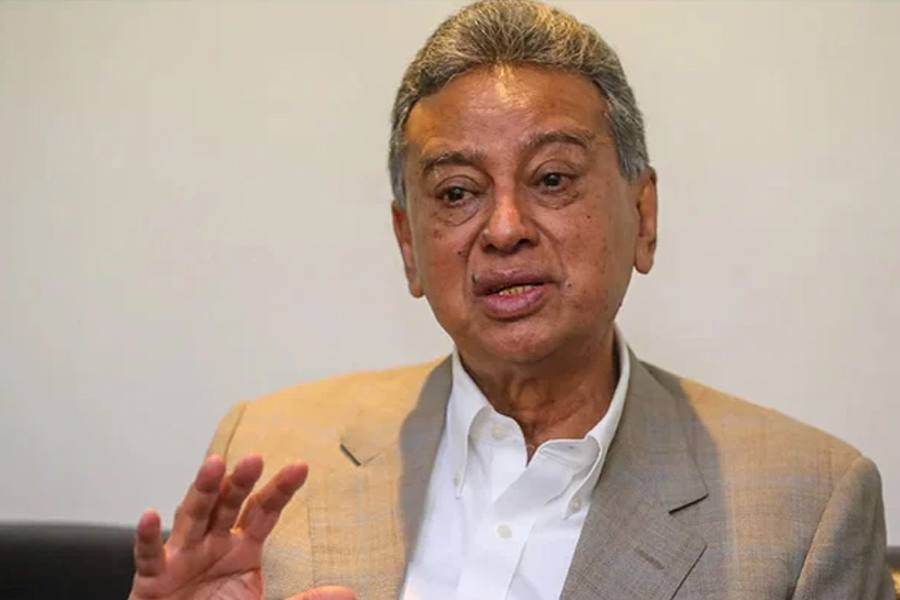
In written responses submitted to Parliament on Wednesday, the minister outlined what he described as a “Three-R Strategy” — Recovery and Stabilisation, Restoration, and Reconstruction for Acceleration — designed to safeguard macroeconomic stability, diversify exports and enhance the economy’s competitiveness.
The announcement comes as policymakers grapple with a series of external challenges, including volatile energy prices, uncertainty in global trade and concerns that prolonged conflict in the Middle East could disrupt overseas employment opportunities for Bangladeshi workers and weaken remittance inflows, a key source of foreign exchange.
To reduce those risks, the government is pursuing new labour agreements with Russia, Portugal, Romania, Brazil, Greece, Serbia and North Macedonia, while also seeking to reopen labour markets in Malaysia, Oman, the United Arab Emirates and Kuwait.
The government will maintain its 2.5 per cent cash incentive for remittances sent through formal channels and continue efforts to bolster foreign exchange reserves through export diversification, tighter controls on non-essential imports and exchange-rate stability.
The finance minister also said Bangladesh was preparing contingency measures to offset potential increases in global fuel, liquefied natural gas (LNG) and fertiliser prices. These measures include diversifying energy sources, accelerating domestic gas exploration and maintaining subsidies where necessary.
Alongside the broader economic strategy, Chowdhury announced plans to bring 17 additional business sectors under a fixed value-added tax (VAT) regime from fiscal year 2026-27 as part of efforts to increase revenue collection.
Responding to another question in the House, the minister said the sectors include grocery stores, garment and clothing retailers, confectionery businesses, cosmetics shops, sellers of plastic and ceramic household goods, shoe retailers, hardware stores, decorators, mobile phone and electronics retailers, paint and sanitary fittings businesses, tile dealers, corrugated sheet retailers, rod and cement traders, furniture stores, beauty parlours, sweet shops and restaurants.
According to the finance minister, VAT collection reached Tk 1.42 trillion in fiscal year 2024-25.
In a separate parliamentary response, the minister said it remained difficult to determine the precise amount of money illegally transferred abroad from Bangladesh due to the lack of sufficient internationally accepted data.
However, citing findings from the White Paper Committee formed by the interim government, he said Bangladesh experienced an estimated US$234 billion in illicit financial outflows between 2009 and 2023, averaging about US$16 billion a year.
The committee estimated that the outflows were equivalent to 3.4 per cent of GDP in fiscal year 2023-24, nearly one-fifth of the country’s combined export and remittance earnings, more than 11 per cent of national savings and almost double the volume of net foreign aid and foreign direct investment inflows.
The figures highlight the scale of the challenge facing the government as it seeks to restore confidence in the economy, strengthen foreign exchange reserves and improve fiscal sustainability amid a turbulent global environment.
Source: https://thefinancialexpress.com.bd/economy/bangladesh/pksf-raises-fy27-financing-target-by-45pc-to-boost-employment