The spike in anti-Asian violence is real — but we need facts, not moral panic and politicized narratives

Amidst ongoing concerns about an apparent spike in violence against the Asian-American community, a horrific killing spree that seemed to primarily target Asian-American women erupted in Atlanta on Tuesday. Robert Allan Long, 21, has been charged in the fatal shootings of eight people, six of them women of Asian background, at three businesses: Youngs Asian Massage Parlor, Gold Massage Spa, and Aromatherapy Spa. Long has told investigators that he was seeking to eliminate the “temptations” he saw as causing his sex addiction.
That’s not the final word, obviously, and doesn’t rule out a racial motive. A killer’s words can provide useful information, but he could be lying, trying to spin his actions in a way he thinks is positive, or fail to fully understand his own motivations. Even if his primary motive turns out to be misogyny, or disdain for sex workers, he chose to attack Asian spas, rather than other locations, and his so-called “temptation” could involve racialized fetishization. Motive doesn’t have to be only one thing.
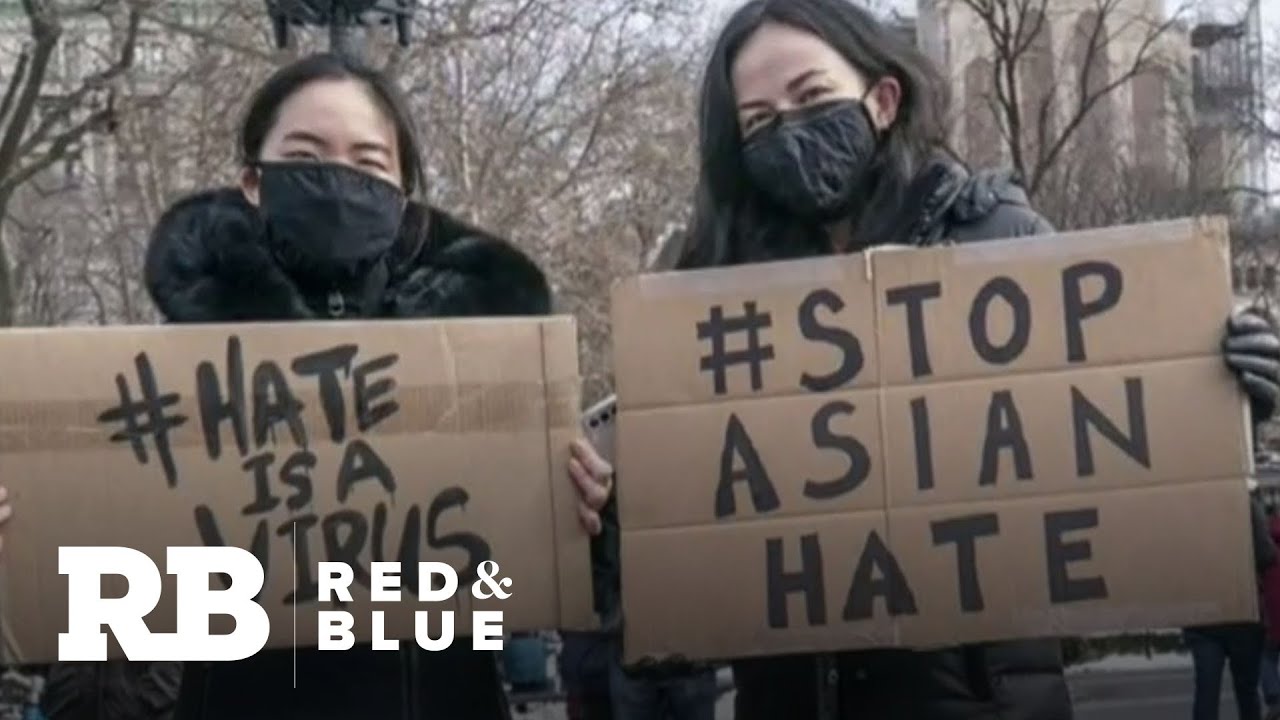
Whatever the investigation ultimately shows, the outpouring of sympathy and solidarity with the Asian-American community was more than warranted. Since March 2020, more than 3,000 incidents targeting Asian Americans were reported to Stop AAPI Hate. Most don’t rise to the legal definition of hate crime, but those numbers also increased, more than doubling in major U.S. cities in 2020 compared to 2019.
Unfortunately, in an “anti-racism moment” that has turned to a wave of moral panic, the reaction to the Atlanta attack has also included distorted narratives that blame “white supremacy” well ahead of the facts — and sometimes twist the facts as well.
Yesterday, for instance, a portion of progressive Twitter seemed less angry at the gunman than at a Georgia police official who, the Twitterati said, had expressed sympathy with the monster.
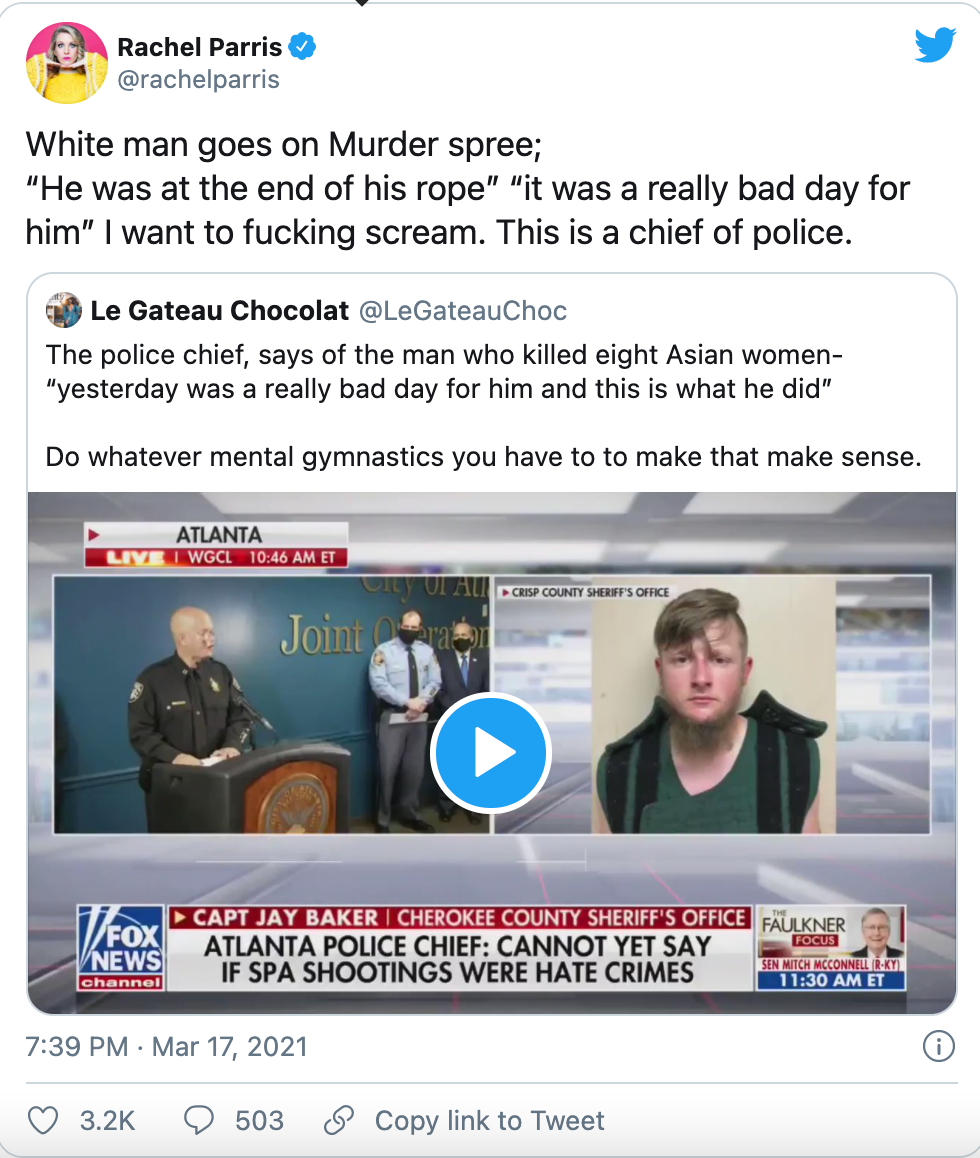
“I’m so mad about Captain Jay Baker’s comments, I’ve deleted and retyped this post five times,” tweeted writer/activist Celeste Pewter, a communications director for a California state legislator. “But bottom line: this is *exactly* what I and so many predicted would happen — people would try and justify this murderer’s actions. NO. Push back. Do it loudly.”
But what exactly had Captain Jay Baker said that was so terrible? The first tweet that set the backlash in motion came from Vox reporter Aaron Rupar:

The brief clip in the tweet shows the following comment by Cherokee County Capt. Jay Baker, in response to a reporter’s query about whether the shooter “understood the gravity of what he did”:
“When I spoke with investigators, they interviewed him this morning, and they got that impression that, yes, he understood the gravity of it, and he was pretty much fed up and had been at the end of his rope, and yesterday was a really bad day for him, and this is what he did.”
Even from this clip — which it is safe to say most of the people who “liked” or retweeted Rupar’s tweet didn’t watch — it’s evident that Baker was not offering his own explanation for Long’s actions, let alone excusing them, voicing sympathy, or putting himself in Long’s shoes; he was relaying what Long told investigators. The full context of Baker’s remarks, which start at 13:40 in the video of the press conference by Atlanta’s mayor and police officials, makes it even clearer that his alleged sympathy for the white devil is strictly in the mind of the Twitter outrage mob. (The captain even warns against “victim-shaming,” in view of the fact that many of the victims were sex workers.) It is also worth noting that Capt. Baker sends his supposedly white supremacist sympathy message while standing right next to his black boss, Atlanta Mayor Keisha Lance Bottoms, who doesn’t seem to see anything amiss.
A few people in Rupar’s thread (including one self-proclaimed Black Lives Matter supporter who noted that he was “ACAB af,” i.e. a strong believer in the “All Cops Are Bastards” slogan), tried to point out that the captain’s words were being taken out of context. But far more jumped on the outrage bandwagon, sometimes to thousands of “likes” and retweets.

(Rather ironically, one of these tweeters says in her profile, “I don’t take information as fact without question. Nor do I question without reviewing facts.” Uh-huh.)
Professional journalists such as GQ’s Julia Ioffe and Talking Points Memo’s Josh Marshall, also joined the Twitter chorus. Some major media outlets ran with the narrative as well. A Washington Post story by Meryl Kornfield and Hannah Knowles opened with:
The backlash began with the sheriff spokesman’s statement to reporters that the mass shooting suspect was having a “bad day.”
“He was pretty much fed up and kind of at the end of his rope. Yesterday was a really bad day for him and this is what he did,” Cherokee County sheriff’s office Capt. Jay Baker said Wednesday.
Meanwhile, The Daily Beast ran a story by reporter/editor Blake Montgomery headlined, “Asian Community Calls Out Cops’ ‘Sad Excuse’ for Atlanta Massacre.” The “Asian community” quoted in the piece consisted of exactly one activist who took umbrage at Capt. Baker’s remarks and one BuzzFeed journalist who did not mention those comments but felt that questioning whether Long’s motives were racist was in itself inappropriate.
The backlash against Baker was reinforced when evidence surfaced that he had promoted a shirt on his Facebook page that calls COVID-19 an “IMPORTED VIRUS FROM CHY-NA.”
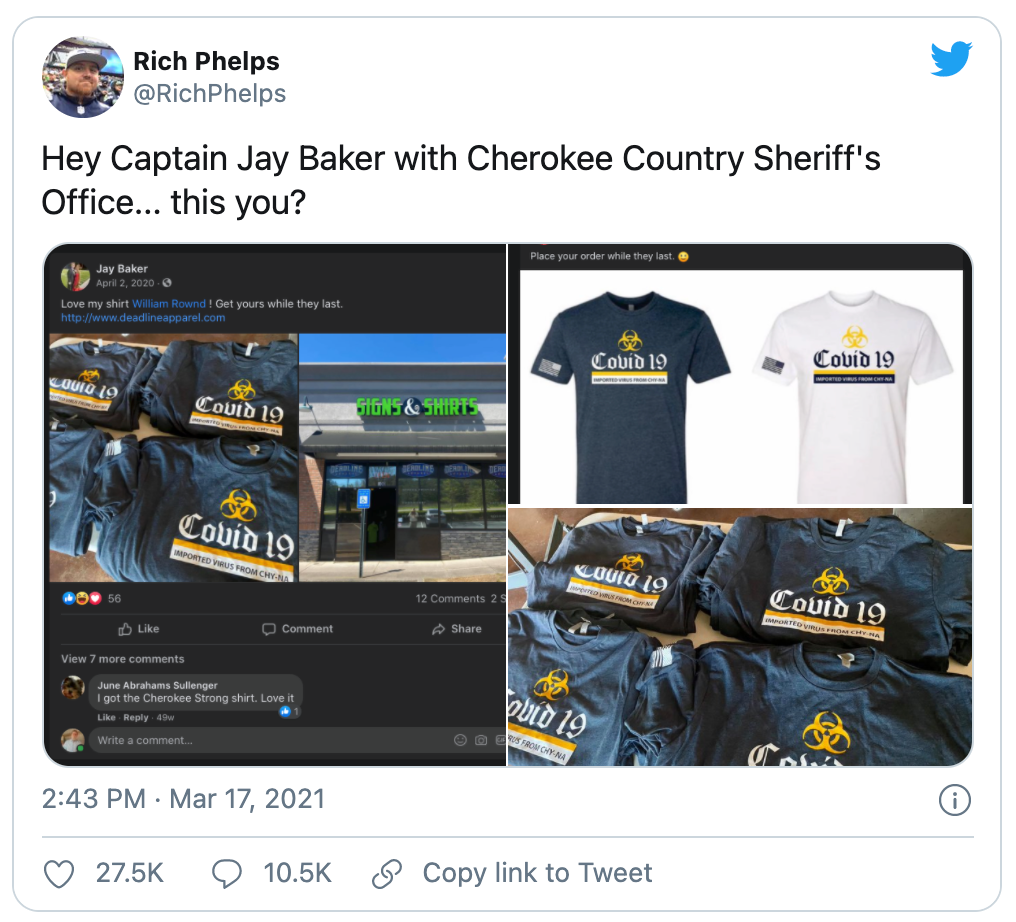

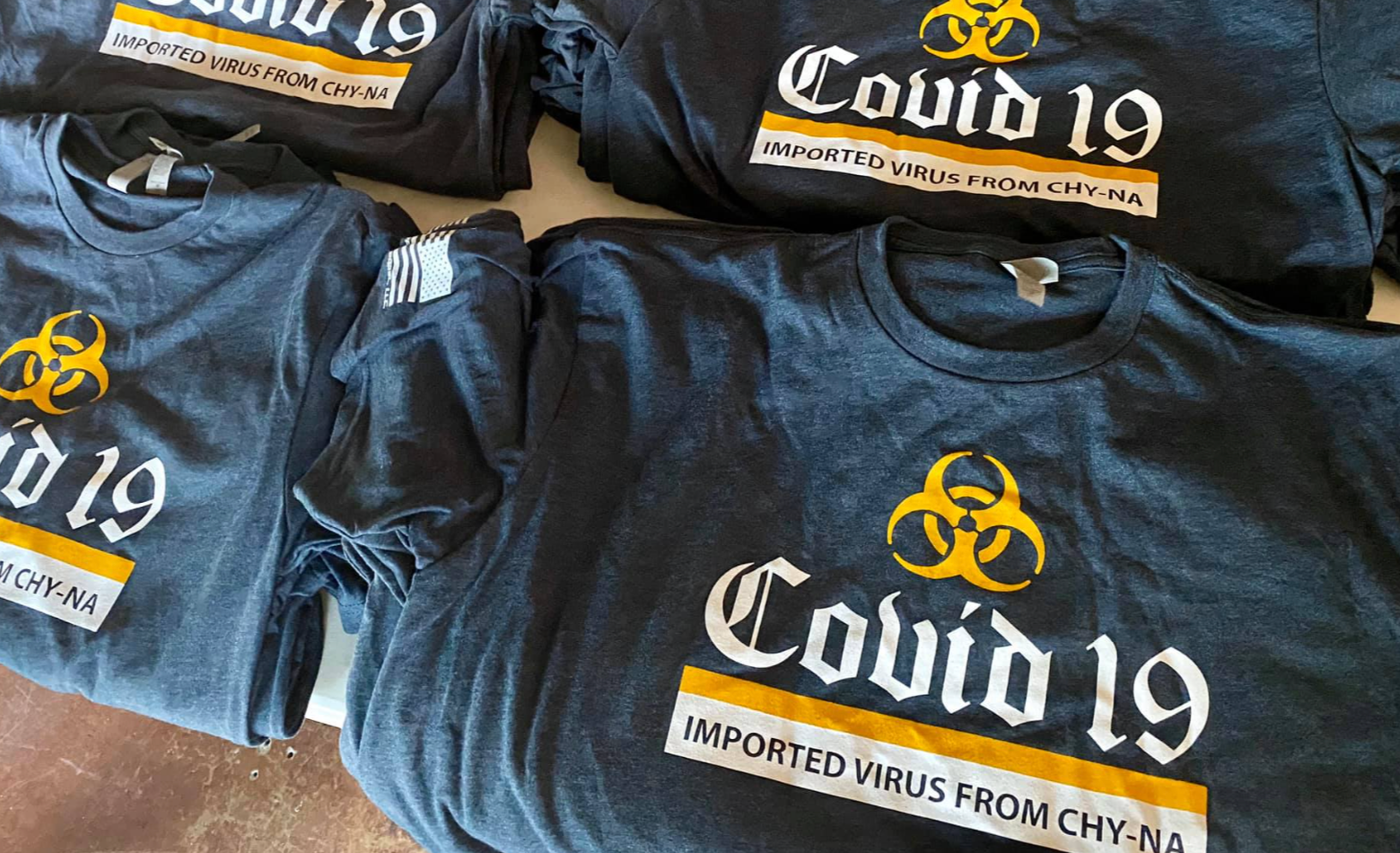
To many, this was incontrovertible proof that Capt. Baker’s statements reflected deep-seated bigotry. BuzzFeed’s Stephanie Rae reported the discovery under the headline, “The Cop Who Said The Spa Shooter Had A ‘Bad Day’ Previously Posted A Racist Shirt Blaming China For The Pandemic.” Progressive pundit Will Wilkinson tweeted out the BuzzFeed story with a comment describing Baker as “so intensely racist he didn’t even notice himself openly sympathizing with a guy getting ‘fed up’ and murdering a half dozen Asian women.”
I don’t think it’s a good idea for a police spokesperson to tout such a shirt on Facebook. On the other hand, to call someone “intensely racist” because of it seems excessive. Yes, the “China virus/Kung Flu” tropes embraced by many on the right last year, following Donald Trump’s example, had a noxious racial subtext — even if, in many cases, the purpose was not to attack Asian-Americans so much as to “trigger the libs” and divert attention from Trump’s mishandling of the crisis. No matter the intention, it likely contributed to a climate in which a third of Asian-Americans say they’ve experienced racial or ethnic slurs since the start of the COVID-19 pandemic.
The T-shirt Baker posted, on the other hand, is a spoof of the Corona Beer logo; “imported from Chy-Na,” in small letters, is clearly meant to parody “Imported from Mexico.” (The deliberate misspelling of “China,” which could be seen as racist or xenophobic, is apparently a meme making fun of Trump’s pronunciation of the word.) Thoughtless? I agree. “Racist” is more of a stretch. After all, this virus did come to the U.S. from China, much as the “U.K. variant” came to the U.S. from the U.K.
For what it’s worth, the Snopes fact-checking site reports that it found no political or culture-war content on Baker’s Facebook page before it went private.
To say, as The Daily Beast did yesterday, that Baker “posted racist t-shirts that specifically targeted the Asian-American community” is like saying someone posted “antisemitic cartoons that specifically targeted the American Jewish community” in reference to a cartoon critical of Israel and seen by some as using antisemitic tropes. It’s possible to criticize a foreign government without being bigoted against Americans who share an ethnicity with the foreign country’s majority.
This is not about whether there is racial bias in law enforcement. Plenty of evidence suggests that there are very real disparities in the treatment of white and African-American suspects in particular. Whether this can be applied to the extremely rare cases of mass shooters is another question. In 2015, some criticized police for giving Dylan Roof, the white supremacist who gunned down nine people at a black church in Charleston, South Carolina, a bulletproof vest after his arrest and supposedly taking him to Burger King (in fact, a burger was delivered to the police station where he ate it in handcuffs). But Vice reporter Mike Pearl concluded that it was hard to say how unusual his treatment was in cases involving high-profile suspects; the bulletproof vest, at least, was also issued in 2002 to Washington, D.C.-area sniper Lee Boyd Malvo, who is black.
Regardless, the idea that to talk about a killer’s motives or mental state is to excuse or justify the crime is preposterous and pernicious. If Baker’s comments about Long were “dehumanizing” and “callous,” as Amara Walker and John Avlon have suggested on CNN, what is there to say about this statement made on the air by one of CNN’s own reporters:
CNN has spoken to former roommates of his who described that he went to rehab for sexual addiction, that he was deeply religious and felt distraught and tortured by his sexual addiction.
Was this a shocking expression of sympathy for a mass murderer offered by some soon-to-be canceled bigot? No, it was Asian-American reporter Tanya Chen — who, later that day, could be found retweeting outrage about Capt. Baker and his “racist” T-shirt.


For something that looks much more like excuse-making for violence against Asian-Americans, I offer you this comment in a major liberal magazine the day after the Atlanta shootings:
Part of the reason there’s a spike in anti-Asian violence is that people are angry and desperate.
Who said it? Asian-American author and activist Cathy Park Hong, a U.S.-born daughter of Korean immigrants, in an interview to The Atlantic. (She did add, “I’m not saying that we should excuse that. I’m just trying to think of the reasons why it’s happening to Asians.”)
There’s a catch: The interview was done before the shootings, and Hong was talking about “the optics of a Black or brown person assaulting or attacking the Asian elderly.” Her concern is that people are reluctant to see such attacks as “symptomatic of white supremacy” and that “white people will not hold themselves accountable.”
At the risk of stating the obvious, racism in a multiracial society is a hugely complicated phenomenon, and racial violence can happen for a variety of reasons. It’s not an absurd idea that a dominant racial caste could pit two oppressed minorities against each other.
But the truth is that in 21st Century America, anti-Asian bias exists in a peculiar setting — one in which, on most metrics (income, education, incarceration rates, etc.), Asian-Americans are “privileged.” (Asians are perceived as having good relations with the police on a par with whites; while they are slightly more likely to report being unfairly stopped by the police because of race or ethnicity, white men are killed by police at 1.7 to four times the rate of Asian-American men.) Thus, while white racism against Asians certainly exists, Asian-Americans simply do not fit easily into the narrative of omnipresent white supremacy. Hence the tendency in progressive circles to treat Asian-Americans as having “privilege” or “white adjacency/proximity.”
The Atlanta shootings, and the alleged racism displayed by Capt. Baker, allow both progressives in general and “woke” Asian-American activists in particular to incorporate anti-Asian violence into the familiar narrative of white racism and “whiteness.” But while this narrative may help explain the killer — at least insofar as his sexual obsession likely had elements of a racial fetish — it doesn’t align with the truth about Capt. Baker’s misrepresented comments. The effect is not only to smear a person using an out-of-context clip and to make more people worry that police are going easy on this sure-to-face-charges murderer, but to exploit the victims of a tragedy.
If you think that’s helping people who face racist violence, it’s not.
Correction: The initial version of this story erroneously indicated that the clip posted by Aaron Rupar included the reporter’s question as well as Capt. Baker’s reply.